DESCENDANTS
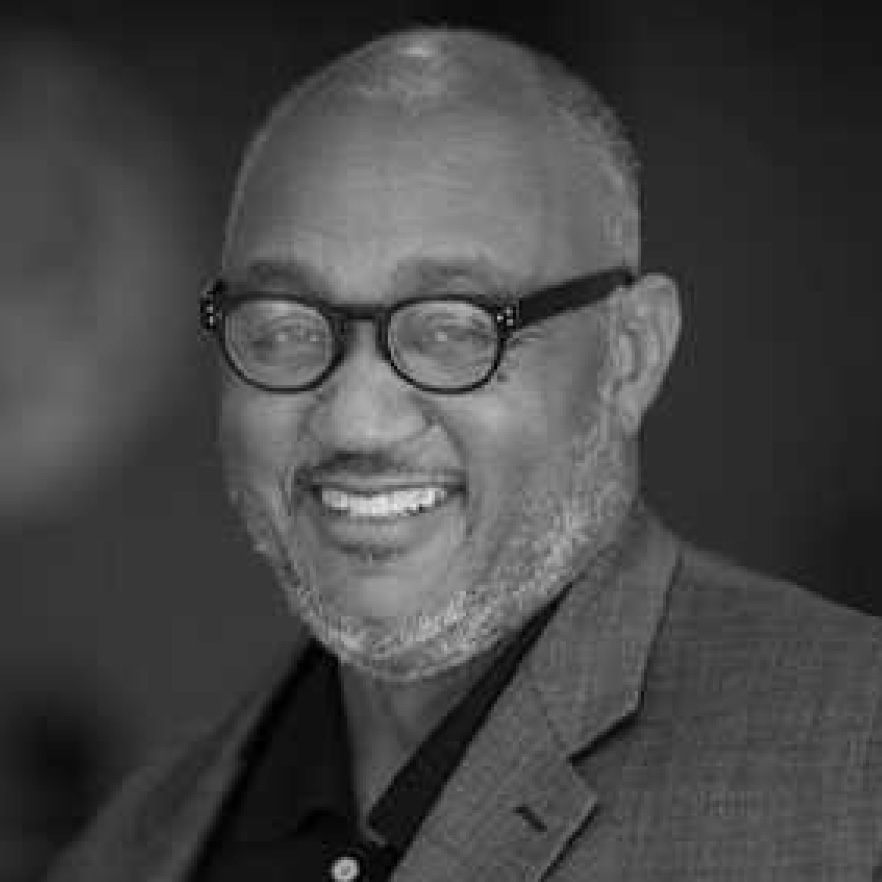
Carlton Brown
Carlton Brown is a 4th-generation descendant of Nat and Agnes. His father was Allen Brown and his paternal grandfather was Lafayette Brown, born in 1862. Lafayette’s parents were Isaac Brown and Jane Carr. 1896 records show that Lafayette was one of the founding members of the 7th Street Presbyterian Church in Charlotte and one of the organizers of the Emancipation Parade in Charlotte (aka Juneteenth). In the Raleigh Gazette, a Black newspaper, Lafayette was cited as “one of the well known colored men organizing the parade” along with Sandy McKee (One of Carlton’s ancestors by way of his mother).
Carlton has had a long-term focus for much of his career on developing strategies for creating sustainable restorative human settlement which heal the physical and human fabric of communities. He has been leading Direct Invest in its exploration of strategies to develop “closed loop” triple bottom line developments in the “developed northern hemisphere” and in rural sub-Saharan Africa. The developments Direct Invest pursues are strategies for adapting to climate change, reducing climate impacts from human settlement, and creating communities in which all people can be self-actualized.
Through his research and to his delight, Carlton discovered that Kyle Smith is a cousin via Anna/Agnes Eccles (Carlton’s great, great, grandmother) and Nat Caldwell (blacksmith), dating back to 1775.
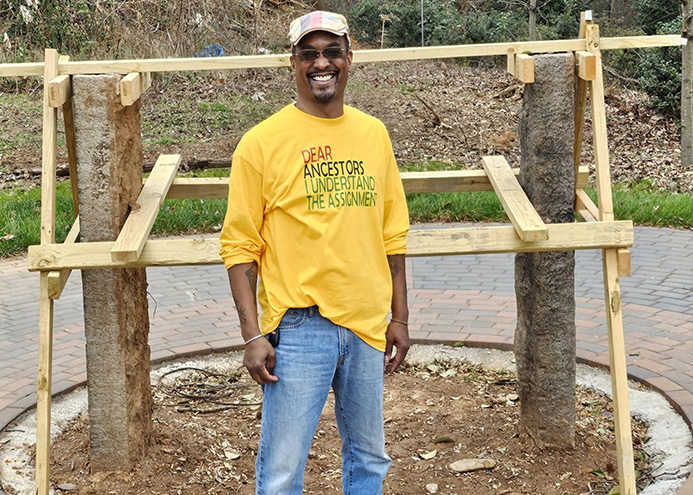
Kyle Smith
Kyle Smith is a sixth-generation descendant of Nat and Agnes and fourth-generation descendant of their grandson, George Washington Caldwell, Sr. He is a Marketing Technology Senior Specialist for a Wall Street based law firm and long-time youth educator teaching Math and ELA to 3rd and 4th graders in a local Saturday enrichment program. He is a dedicated board member and treasurer for Egbe Iwa (egbeiwa.org), a year long rites of passage program that provides cultural mentorship to youth transitioning from childhood to young adults. Kyle is also a member of Rosedale’s African American Legacy Committee (AAL) and designed the African American Memorial with assistance from Rosedale related cousins Tawana Allen and Tamia Williams and committee members Elizabeth Myers and Ronald Schumann.
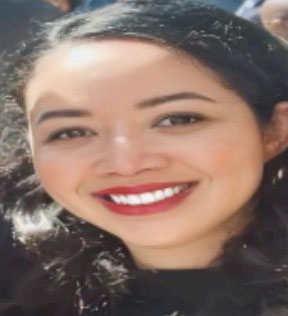
Tamia Allen Williams
Tamia Allen Williams is a sixth-generation descendant of George Caldwell, son of a Historic Rosedale owner and an enslaved woman. She is a native Charlottean and has three daughters. She earned her Bachelor of Science in Business Administration from Florida A&M University and more recently her Master of Business Administration from Wake Forest University.
Spanning 30 countries, Tamia has served various industries as a certified audit and risk professional with more than 20 years of experience. She also volunteers with the Girl Scouts.
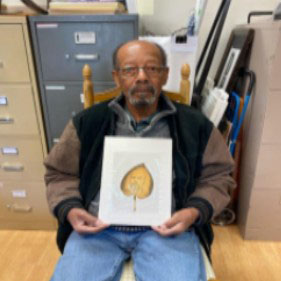
Harold Wiley, Jr.
Harold Wiley Jr., a descendent of George Caldwell, talks about his family, their connection to the Rosedale plantation in Charlotte, North Carolina, and his lifetime work discovering his family genealogy. Mr. Wiley explains how he first started hearing about his family’s connection to Rosedale from his grandfather when he was a child in New York City. His grandfather told him that his great-great-great-grandfather was Nat, the first blacksmith on the Rosedale plantation, and that Nat was buried in a white cemetery. He discusses how as a young adult in 1963 he took a significant trip with his uncle Ed to North Carolina to visit his extended family for the first time. Following this visit he heard stories of how his grandfather and his uncle Ed would go to the plantation in Charlotte where George (Caldwell) worked and that George stayed with his daughter Sarah (Caldwell Knox) who lived on Tryon Road (North Tryon Street). However, it was not until years later, when he was able to access his uncle Ed’s address book, that he discovered that his extended family included the name Caldwell and was able to connect with his relative Robert Caldwell for the first time. Mr. Wiley describes his first visit to Rosedale in the 1990s and his meeting there with local historian Carol Tripp. He describes how he shared a significant story with Ms. Tripp that was told to him by his grandfather about his enslaved ancestor, Cherry, who surreptitiously smoked pipes in the house: a story that was also told by the descendants of white plantation owner Dr. Caldwell. Following this, Mr. Wiley visited Rosedale frequently and connected with his Caldwell family members for reunions there on a number of occasions. He relates how he first got a photograph of his great-great-grandfather, George Caldwell, from his aunt Ruth and discusses his search for George’s possible burial location. He talked about the parentage of George Caldwell, who was of mixed race.
Other topics of discussion were: his grandmother Sarah Caldwell Knox, his extensive collection of family photographs, his uncle Fred who was a plasterer and painter and his extended family members, including the Caldwells, the Klutzes, the Hendersons, the Johnsons, and the Harkeys. He talked about his Aunt Ruth, who had an extraordinary and reliable memory, his DNA testing with 23 and Me, churches in Northern Mecklenburg County that family members may have attended, the home where George lived with his daughter Sarah on Tryon Road (North Tryon St). and family relationships between his family and Dr. Caldwell’s descendants. It was wonderful to hear about his life, including his childhood in Harlem, Corona in Queens, and West Yaphank on Long Island, before returning to Corona. Proudly, he discussed his military career in the Air Force where he served in Southeast Asia during the Vietnam War, returning to bases in Virginia and Arkansas after the war. He talked about his work as a planner and scheduler for nuclear power submarines at Newport News shipyard and lovingly spoke of his wife and their family life together.
Interviewer: Ronald L. Schumann III
Entire Interview can be found at:
Harold Albert Wiley Jr. oral history interview, 2017 July 27
Editors: Ronald L. Schumann III; Harold Albert Wiley Jr. – 2017